
Short answer: choose woven patches when your design has small text or fine detail (down to 1 mm lettering) and you want a flat, smooth label-like finish; choose embroidered patches when you want raised, dimensional texture and classic workwear look. Woven typically costs 10-25% less and reproduces detail roughly 2-3× finer than standard 75% embroidery.
Last updated: November 2026. Figures based on FactoryPins quote data: 2″ patches, 100-500 units, merrowed border.
The 60-Second Version (TL;DR)
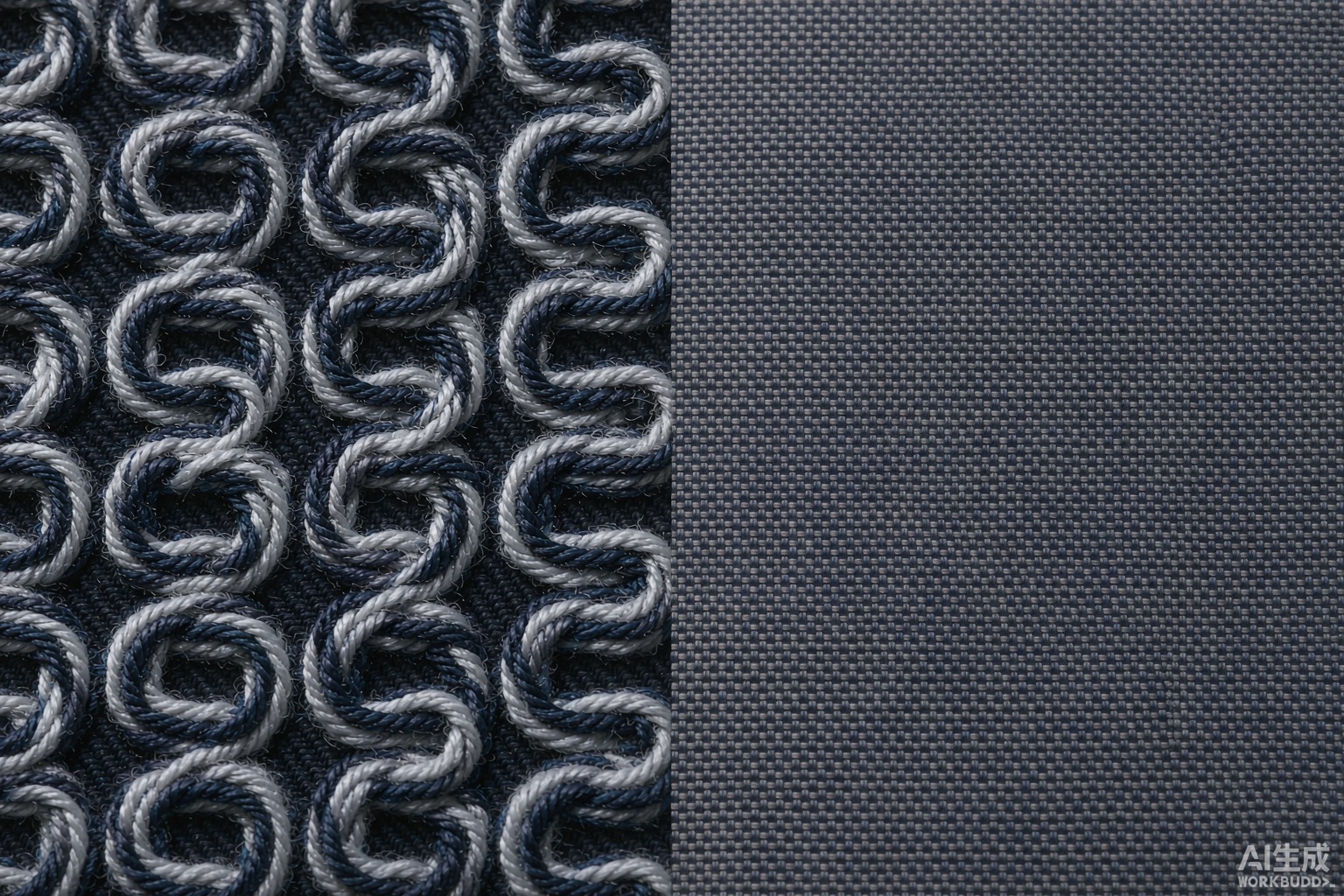
- Embroidered: thick thread stitched over twill — raised, textured, classic. Detail limit: about 2 mm line width at standard density.
- Woven: thin threads woven directly into the fabric itself — flat, smooth, handles 1 mm text and fine lines.
- Neither fades faster than the other; both survive 30-50 gentle washes.
- Rule of thumb: text under 3 mm tall → woven. Bold shapes and mascots → embroidered.
Side-by-Side Comparison
| Factor | Embroidered Patch | Woven Patch |
|---|---|---|
| Thread style | Thick polyester thread stitched over twill base | Thin continuous threads woven into the fabric |
| Surface texture | Raised, 3D, textured | Flat, smooth, label-like |
| Finest detail / text | ~2 mm lines; text readable from ~3 mm height | ~1 mm lines; text readable from ~1.5-2 mm height |
| Color count | 6-9 thread colors standard | Up to 8 thread colors; gradients approximate |
| Coverage (100% embroidery option) | Full, plus 75% and 50% partial options | Always full coverage |
| Typical unit price (2″, 100 pcs) | $0.40-$0.90 | $0.30-$0.80 |
| Production time | 10-14 days | 10-14 days |
| Best for | Mascots, badges, bold logos, varsity look | Small text, intricate logos, care labels, streetwear labels |
| Feel on garment | Thick and dimensional | Thin and flexible, sits closer to fabric |
How Each Is Made (Why the Detail Difference Exists)
Embroidered patches are stitched: a needle lays thick thread over a twill base, and at standard 75% coverage the base fabric shows between stitches. The thread’s physical width sets the detail floor — a stitch line is roughly 2 mm wide, so anything narrower gets crushed.
Woven patches are loomed: the entire face of the patch is woven from continuous thin threads, like a high-density clothing label. There is no stitching-over, so line width is limited by the loom, not the thread — about 1 mm. That is why woven patches hold tiny serif text and thin outlines that embroidery turns to mush.
When Embroidered Is the Right Choice
- Bold, simple artwork — mascots, shields, sports crests. The raised texture is the look.
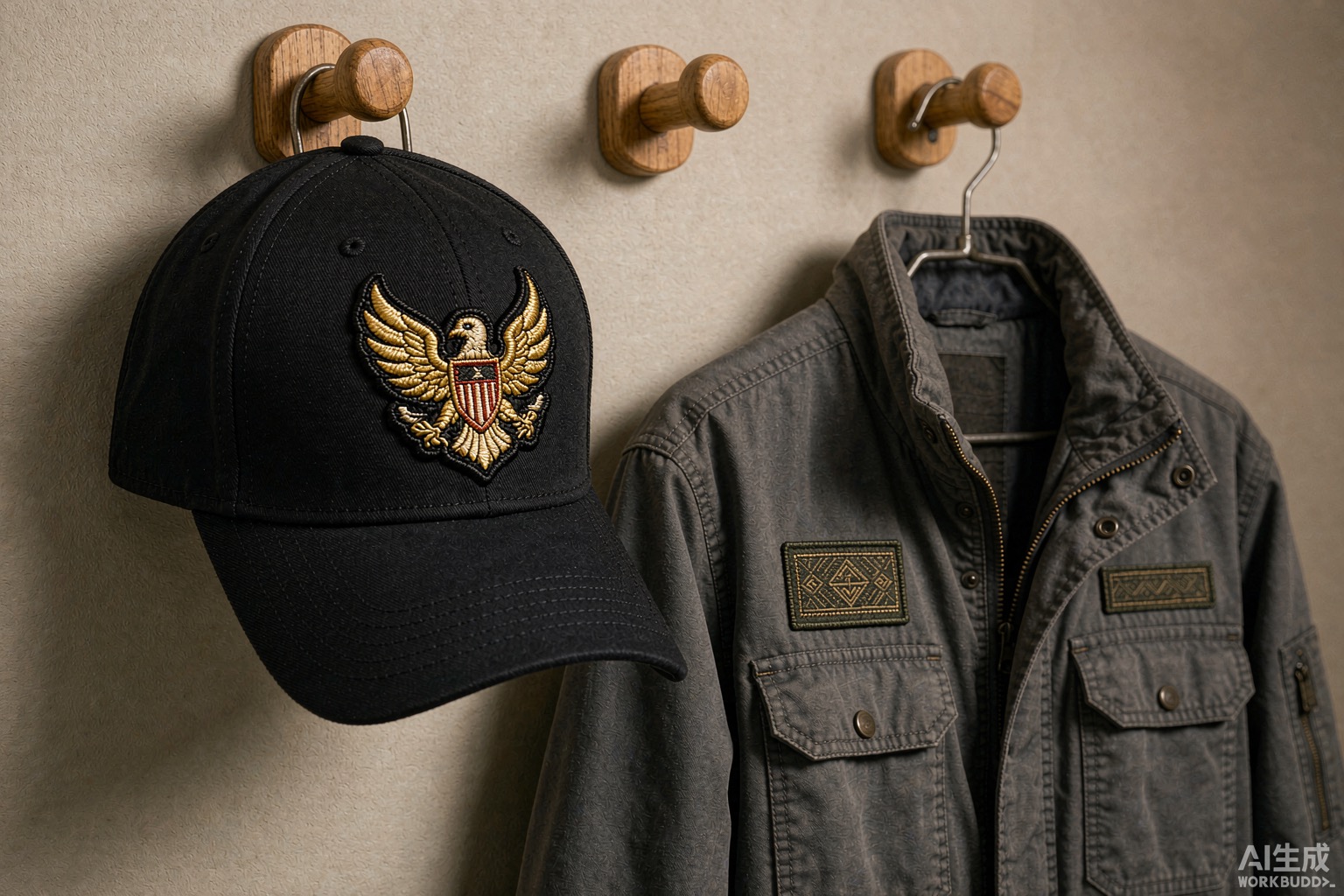
- Workwear and tactical applications — dimensional embroidery reads as “durable gear” and holds up on heavy fabrics.
- Partial-coverage budgets — 50%/75% embroidery options cut cost on large patches where the background can stay exposed twill.
When Woven Is the Right Choice
- Text-heavy designs — brand names, taglines, multilingual labels. If text must be readable up close, woven wins.
- Intricate line art — detailed illustrations, maps, fine geometric patterns.
- Large patches that should stay light and flexible — woven lies flatter against the garment and weighs less per square inch.
When Neither Is Right (Honest Guidance)
- Photographic or gradient artwork: both styles approximate gradients with thread shades; sublimated (printed) patches handle photos better — accept the trade-off in texture.
- Extremely small patches under 1″: at that size even woven loses detail; consider a printed label or a pin instead.
- High-abrasion surfaces (backpack bottoms, knee areas): both are thread products; a PVC patch outlasts both in mud-and-abrasion use.
How to Choose in 4 Steps
- Measure your smallest text. Under 3 mm tall → woven. Above → either.
- Decide the look. Raised 3D texture → embroidered; flat label look → woven.
- Check the patch size and placement. Large and curved surfaces → woven (lighter, flatter); chest/hat fronts → embroidered.
- Price both at your quantity — the gap narrows above 500 units; get both quotes.
FAQ
Which is cheaper, woven or embroidered patches?
Woven patches typically cost 10-25% less than embroidered patches at the same size and quantity — roughly $0.30-$0.80 versus $0.40-$0.90 for a 2-inch patch at 100 pieces — because weaving is a faster loom process than stitch embroidery. The gap narrows at quantities above 500 units.
Which holds finer detail, woven or embroidered patches?
Woven, by about 2-3×. Woven looms use thin continuous threads and can render lines down to roughly 1 mm and text down to 1.5-2 mm tall. Standard 75% embroidery is limited by stitch thread width to about 2 mm lines, so small text becomes unreadable.
Do woven patches last as long as embroidered ones?
Yes. Both survive roughly 30-50 gentle wash cycles; lifespan depends more on attachment (sewn vs iron-on) and wash temperature than on the stitch style. Sewn-on patches of either type routinely last the life of the garment.
Can a woven patch look the same as an embroidered one?
Not exactly. Woven patches are flat and smooth; embroidered patches have raised dimensional texture. If your design needs the raised “varsity badge” feel, embroidered is the only match. If it needs flat label-like precision, woven is the match.
What embroidery coverage should I order: 50%, 75% or 100%?
Choose 100% when the background color matters (dark designs, full-color logos), 75% when the design’s background can be the twill base color (biggest cost saving at large sizes), and 50% for heavy text-on-background designs. Coverage choice affects price and texture more than durability.